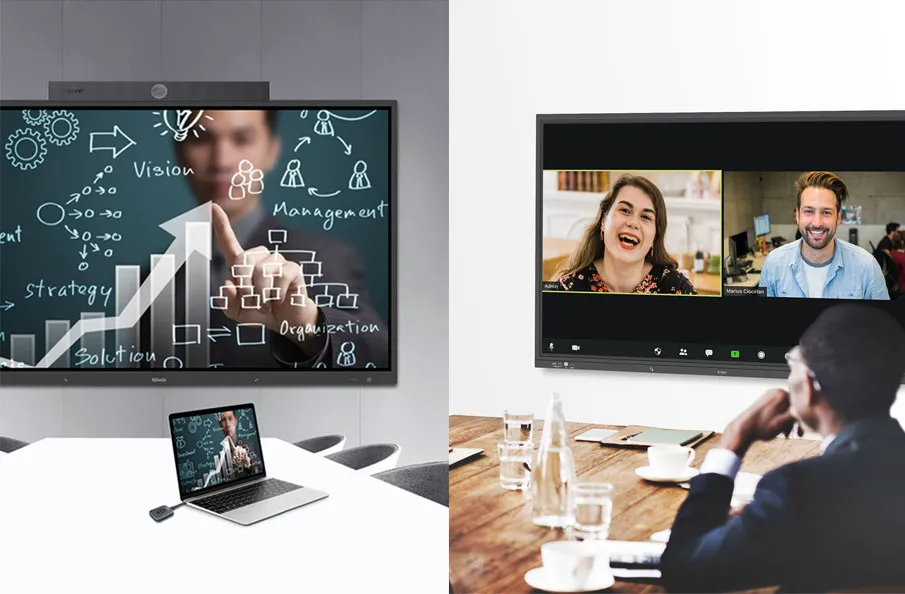
As recently as a few years ago, it appeared that the interactive whiteboard technology was cementing itself as a permanent mainstay in the classroom — helping teachers to embrace technology and promoting 21st-century skills in students. Fast-forward to today, and the market has shifted. While several schools continue to use interactive whiteboards, many are transitioning to interactive digital displays—which look more like flat-panel TVs or jumbo-sized tablets than dry-erase boards—as they fund new purchases.

Unlocking the Power of Interactive Whiteboards
An interactive whiteboard is a large display that connects to a computer and a projector.
Revolutionizing Classroom Engagement
The projector projects the computer’s desktop onto the board’s surface, where users control the computer with a pen, finger, or other device. The board is typically mounted to a wall or floor stand. Student response systems and other such accessories enable interactivity among students.
How Interactive Displays Empower Teachers
One teacher may create an engaging lesson that focuses on one task, such as a matching activity where students use fingers to match items. Another teacher might integrate multiple items into a lesson plan, such as photos, music, and websites, that students can interact with and even write comments on the board. With the interactive whiteboard and interactive display teachers can transform the one-computer classroom into a workable instructional model.
Diverse Applications for Active Learning
Classroom applications for using interactive whiteboards and interactive digital displays include:
· Multimedia lessons and presentations including audio and video
· Collaborative problem-solving
· Showcasing student projects and presentations
· Virtual field trips
· Recorded lessons that can be used by substitute teachers
· Documentation of student achievement
The Versatile Benefits of Interactive Whiteboards and Displays
There are interactive whiteboards and digital displays that meet every school and district budget. Teachers report that increased student engagement is the number one benefit of teaching with these tools. The technology allows teachers to integrate multiple information streams into a coherent lesson individualized for their students and they provide an extraordinary opportunity to create classroom environments where students with different learning styles can engage and learn from each other.
Here are some other articles that we think might interest you:
Increase Engagement with a Large Screen: The 100 Inch Interactive Flat Panel
Creating Engaging Learning Experiences with Interactive Learning Environments